
10 Deck Stain Colours That Hide Autumn Leaves and Dirt
I can see what happened here: everything from “6. Driftwood Brown” onward was accidentally duplicated, including the conclusion. I’ve removed that entire duplicate section, stripped out the WordPress block comments, and kept every image in the correct place.
A freshly stained deck can look immaculate for approximately five minutes in fall. Then come the leaves, muddy footprints, dust, pollen, and everything else the season deposits outside. The good news is that the right deck stain colour can make everyday debris far less noticeable between cleanings.
The most forgiving shades tend to sit somewhere in the middle: not so pale that every muddy mark stands out, and not so dark that dust and dried water spots become obvious. Warm browns, weathered greys, muted taupes, and earthy wood tones also blend naturally with the colours of fallen leaves.
These deck stain colours won’t actually make the dirt disappear, unfortunately, but they can help your outdoor space look cleaner and more consistent through autumn without requiring you to sweep it every time a tree changes its mind.
Quick Guide: Which Deck Stain Colour Hides the Most?

- Best all-rounder: Medium warm brown disguises soil, dried leaves, and everyday outdoor marks particularly well.
- Best for wooded gardens: Cedar and chestnut tones blend naturally with fallen leaves and surrounding trees.
- Best modern option: Mid-tone weathered grey can disguise dust and general wear without looking overly dark.
- Best neutral: Mushroom taupe works well when you want something softer than brown but warmer than grey.
- Usually higher maintenance: Very pale stains can show soil easily, while extremely dark finishes may make pale dust, pollen, and water residue more noticeable.
Always test stain on your actual decking before committing to the entire surface. Wood species, age, previous finishes, preparation, number of coats, and lighting can all affect how the final colour appears.
1. Medium Walnut Brown

Medium walnut is one of the safest choices if your main goal is a deck that doesn’t advertise every footprint and fallen leaf. It has enough depth to disguise everyday dirt while remaining light enough that pale dust doesn’t immediately jump out.
The warm brown undertones also sit comfortably beside the russet, tan, gold, and dark brown colours that appear naturally outdoors during autumn. Instead of strongly contrasting with the deck, small amounts of seasonal debris tend to blend into the overall palette.
Walnut works particularly well with cream siding, black accents, natural stone, and plenty of surrounding greenery.
Pairs Beautifully With
- Warm white or cream exteriors
- Black railings
- Natural stone
- Beige outdoor upholstery
Why it’s practical: A medium-value brown sits close to the colour of many common outdoor marks, making contrast less obvious between routine cleanings.
2. Weathered Cedar
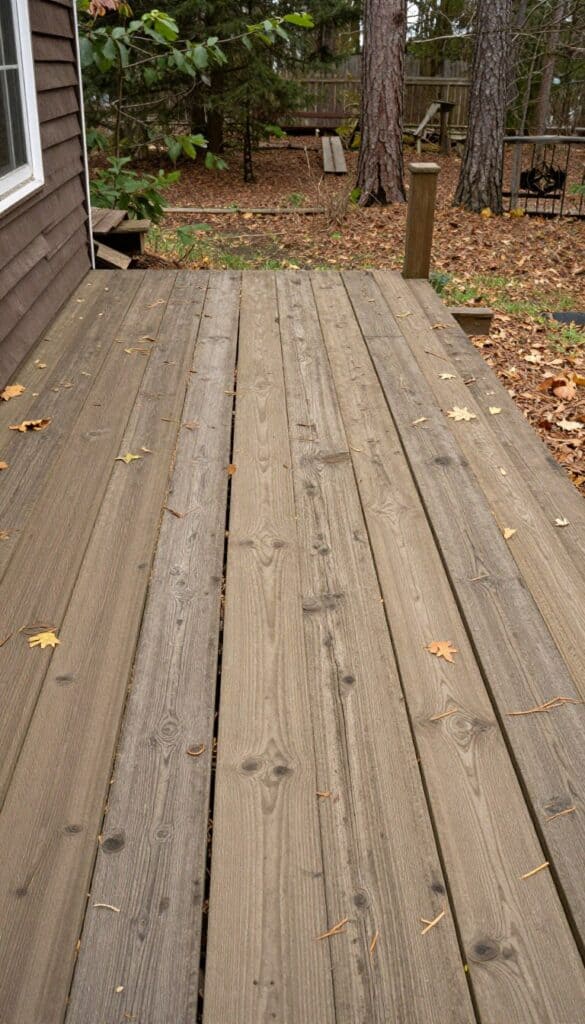
A weathered cedar stain brings warmth to a deck without pushing too far into bright orange territory. Look for a muted cedar shade with softened brown undertones rather than a highly saturated red-orange finish.
This colour is particularly suited to wooded gardens because it relates naturally to tree trunks, dried leaves, pine needles, and other organic debris. A few scattered leaves can look almost intentional against it.
Cedar also retains plenty of traditional wood character, making it a good option if you want the deck to feel warm and natural rather than heavily coloured.
Best Suited To
- Wooded backyards
- Rustic homes
- Cottage-style gardens
- Warm neutral exteriors
Designer detail: A slightly muted cedar generally feels more forgiving and contemporary than a strongly orange-toned finish.
3. Mushroom Taupe

Mushroom taupe sits somewhere between warm brown and grey, which makes it particularly useful when you want a neutral deck without the coolness of a traditional grey stain.
Its mixture of warm and cool undertones can help soften the appearance of dried soil, dust, faded leaves, and general outdoor wear. It also creates a quiet backdrop for furniture rather than becoming the dominant colour in the space.
Pair mushroom with cream, charcoal, black, sage, or natural timber furniture for an understated scheme that works well beyond autumn.
Try This With
- Cream upholstery
- Black metal furniture
- Sage green planters
- Warm wood accessories
Most versatile option: Taupe bridges warm and cool exterior colours, making it easier to coordinate with both traditional and contemporary homes.
4. Mid-Tone Weathered Grey
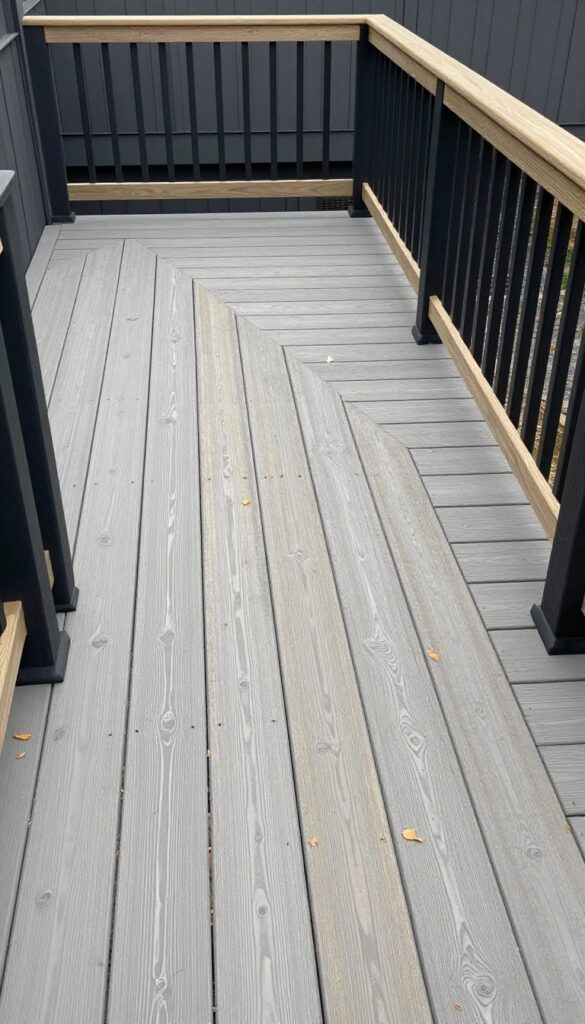
Grey can be surprisingly practical provided you don’t go too pale or dramatically dark. A medium weathered grey has enough variation and depth to soften the appearance of dust, dried marks, and everyday wear.
Choose a grey with slightly warm or greige undertones if you want it to blend more naturally with autumn foliage. Very cool blue-grey can create a stronger contrast against orange and brown leaves, making them more noticeable.
This is an especially good choice for contemporary decks where a traditional reddish-brown stain would feel too rustic.
Modern Pairings
- Charcoal outdoor furniture
- Black railings
- Natural timber accents
- Warm white siding
Practical colour tip: Stay around the middle of the grey scale if hiding everyday debris is more important than creating dramatic contrast.
5. Warm Chestnut Brown

Chestnut brings a little more richness than walnut while still remaining practical enough for a busy outdoor area. Its warm reddish-brown character works particularly well during autumn, when similar colours appear throughout the surrounding landscape.
It’s dark enough to soften the appearance of soil and muddy marks without reaching the almost-black territory where every pale speck of dust can become obvious.
The richer colour can also make a simple deck feel more established, particularly beside brick, stone, warm siding, and traditional garden planting.
Chestnut Works Well With
- Red or brown brick
- Natural stone
- Olive and evergreen planting
- Cream outdoor textiles
Best for fall: Chestnut echoes many of the rust and brown shades already present in fallen foliage, helping scattered leaves feel less visually prominent.
6. Driftwood Brown

Driftwood brown is a softer alternative to traditional dark wood stains. It combines muted brown with subtle grey undertones, creating the sort of naturally weathered colour that already looks comfortable with a little outdoor wear.
Because the shade isn’t perfectly uniform or overly saturated, small amounts of dust, dried soil, and faded leaves tend to create less obvious contrast. It works especially well if you like a relaxed rustic or coastal look but still want the deck to feel warm.
Pair it with natural linen-coloured upholstery, black metal accents, weathered planters, and plenty of greenery for an understated outdoor space.
Driftwood Pairings
- Natural linen tones
- Black metal furniture
- Weathered terracotta
- Soft green planting
Why it works: The combination of grey and brown helps disguise several different types of everyday outdoor debris rather than strongly contrasting with them.
7. Warm Greige

Warm greige is a useful compromise if you can’t decide between a brown or grey deck. The colour combines enough warmth to complement autumn leaves with enough grey to create a contemporary, understated finish.
Choose a medium greige rather than an extremely pale version if hiding dirt is a priority. A little depth helps disguise dried footprints, dust, and everyday marks while still keeping the deck feeling relatively light.
Greige also works with a wide range of house colours, making it particularly useful when the deck connects several exterior materials such as siding, brick, stone, and black metal.
Exterior Colours to Pair With Greige
- Warm white
- Charcoal
- Soft sage
- Natural stone
Best modern neutral: A medium warm greige gives you the clean appearance of grey without creating quite as much contrast against brown and golden fall debris.
8. Medium Oak

If you want to preserve a traditional wood appearance, medium oak is an easy colour to live with. It feels lighter and more natural than walnut or chestnut while still having enough warmth and depth to be relatively forgiving outdoors.
The golden-brown tone blends especially well with tan, yellow, and light brown autumn leaves. It can also disguise small amounts of dried soil more effectively than very pale blond or whitewashed finishes.
Medium oak works particularly well on decks surrounded by traditional planting, timber fencing, warm brick, or natural stone.
Best With
- Warm brick exteriors
- Natural stone
- Wooden garden furniture
- Cream and olive textiles
Most timeless option: Medium oak gives the deck a familiar natural-wood appearance without going so light that every muddy footprint becomes part of the design.
9. Muted Espresso Brown
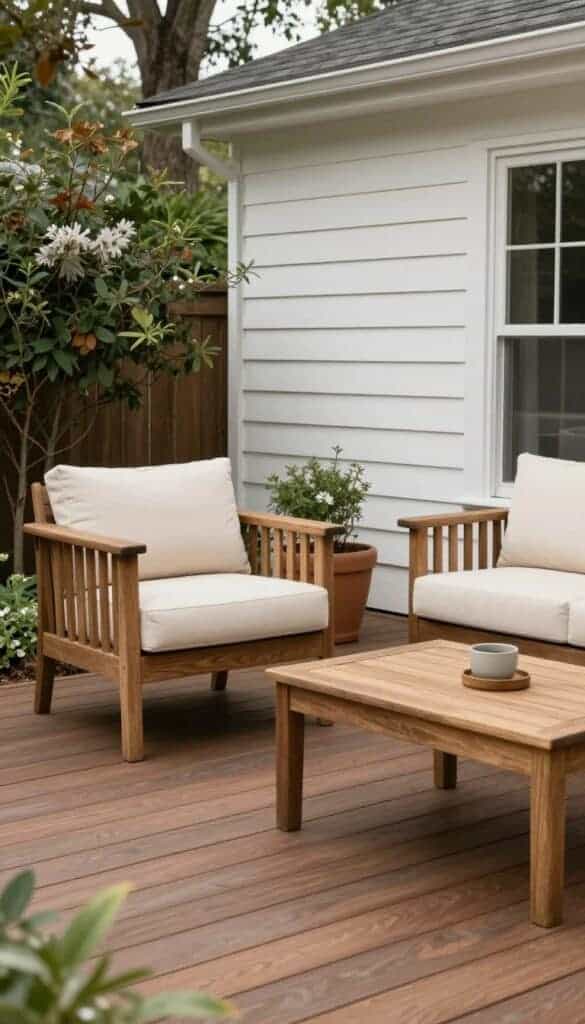
Espresso can give a deck a sophisticated, high-contrast appearance, but there is a practical difference between a softened dark brown and an almost-black finish. If easier maintenance is the goal, look for a muted espresso that still clearly reads as brown.
The depth is useful for disguising darker soil, damp-looking marks, and brown leaf fragments. However, very pale dust, pollen, and dried water residue may be more visible than they would be on a medium-toned stain.
For that reason, espresso is a better choice when you love a darker deck aesthetically and are willing to accept a little extra visibility when lighter debris arrives.
Balance Espresso With
- Cream outdoor cushions
- Warm white siding
- Natural wood furniture
- Green planting
Know the trade-off: Dark brown can conceal darker dirt well, but medium shades are generally more forgiving when your deck regularly collects both light and dark debris.
10. Earthy Olive-Brown
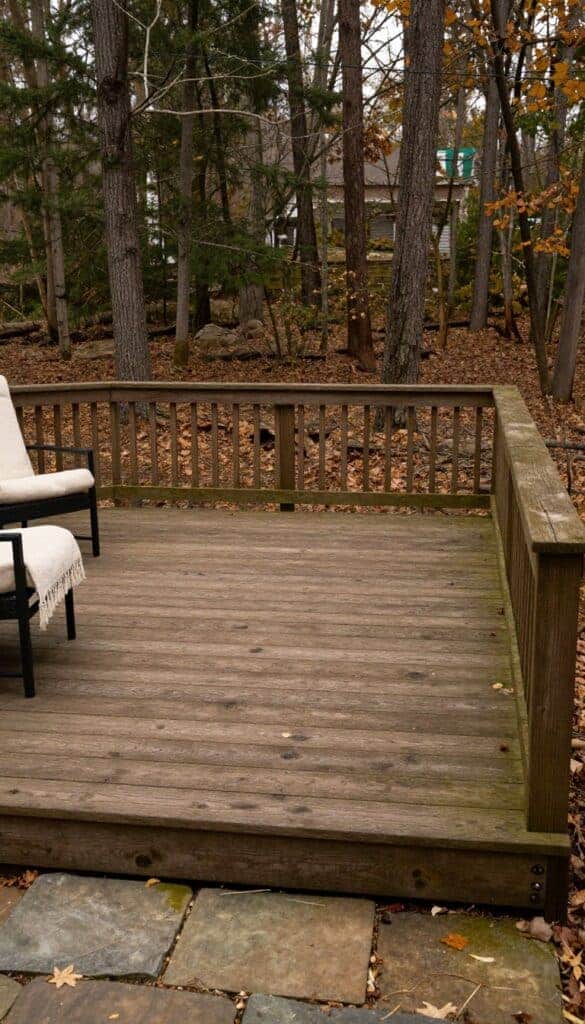
An earthy olive-brown stain is an unusual but beautiful option for a deck surrounded by mature landscaping. Rather than looking obviously green, the best versions read as muted brown with subtle mossy or olive undertones.
Those natural undertones help the decking sit comfortably beside foliage, soil, weathered timber, and autumn leaves. It can be especially effective in wooded backyards where the deck is visually connected to the landscape throughout the year.
Keep furniture fairly neutral so the unusual stain colour remains sophisticated. Cream, tan, charcoal, black, and natural timber are all easy companions.
Natural Pairings
- Weathered timber
- Natural stone
- Black metal
- Cream outdoor textiles
Best for wooded yards: Olive-brown visually connects the deck with surrounding trees and planting, making natural debris feel less conspicuous.
Which Deck Stain Colour Shows the Least Dirt?
In general, medium-toned stains are the most forgiving because they sit between the lightest and darkest debris you’re likely to encounter outdoors. Warm browns, taupes, greiges, and weathered mid-tone finishes are particularly practical choices.
- For muddy footprints: Try medium walnut, chestnut, or another warm mid-brown.
- For dried dust: Weathered grey, greige, and driftwood tones can be particularly forgiving.
- For brown autumn leaves: Cedar, walnut, oak, and chestnut help reduce colour contrast.
- For mixed debris: Mushroom taupe and medium brown are strong all-round choices.
- For wooded surroundings: Muted cedar and olive-brown naturally connect with the landscape.
No colour completely hides dirt, and local conditions matter. A deck beneath pine trees deals with different debris from one beside a muddy lawn, so consider what actually lands on your deck before choosing the finish.
Deck Stain Colours That Hide Autumn Leaves Best
If fallen leaves are your biggest frustration, look at the colours produced by the trees around your home. Choosing a stain with similar undertones reduces contrast and makes scattered leaves less visually distracting.
- Golden and tan leaves: Medium oak, weathered cedar, and warm greige.
- Rust and orange leaves: Chestnut, cedar, and walnut.
- Dark brown leaves: Walnut, chestnut, and muted espresso.
- Mixed woodland debris: Driftwood brown, mushroom taupe, and olive-brown.
How to Choose a Deck Stain Colour for a Wooded Backyard
A deck surrounded by trees usually looks most natural when its colour relates to the landscape instead of fighting against it. Before choosing a stain, stand back from the house and look at the dominant colours in the tree trunks, soil, stone, fencing, and exterior finishes.
- Warm wooded setting: Consider walnut, cedar, chestnut, or medium oak.
- Cool stone or grey exterior: Try mushroom taupe, warm greige, or weathered grey.
- Very green landscape: Olive-brown or muted natural wood shades can blend beautifully.
- Mixed traditional materials: A medium brown is usually easier to coordinate than an extremely cool or dark colour.
Test the Stain Before You Commit
Deck stain is influenced by the wood underneath it, which means the colour on a sample card may not perfectly match the result on your deck. Existing colour, wood species, age, sanding, previous coatings, and application can all change the finished appearance.
Whenever possible, test the product on a small inconspicuous area or a piece of matching wood prepared in the same way as the deck. Allow it to dry according to the manufacturer’s instructions and look at the colour in morning light, afternoon sun, shade, and overcast conditions.
Also check the product’s preparation requirements, recommended number of coats, drying conditions, coverage, maintenance instructions, and compatibility with any existing finish before starting the project.
You Might Also Like
How to Keep a Deck Looking Cleaner During Fall
The right stain colour can disguise everyday debris, but it shouldn’t replace basic maintenance. Wet leaves can hold moisture against the surface and may become slippery, so regular clearing still matters even when the deck doesn’t look particularly dirty.
- Sweep regularly. Remove accumulating leaves, twigs, and other loose debris.
- Pay attention to corners. Leaves often collect against walls, planters, furniture, and railings.
- Move planters occasionally. This makes it easier to clean underneath and notice trapped moisture.
- Clean spills promptly. Don’t rely on a forgiving stain colour to disguise marks indefinitely.
- Follow the stain manufacturer’s care instructions. Use cleaning methods and products appropriate for your particular finish.
The Most Forgiving Deck Stain Colours at a Glance
If a low-maintenance appearance is the priority, start your search in the middle of the colour spectrum rather than at either extreme.
- Best overall: Medium walnut brown
- Best warm option: Weathered cedar
- Best neutral: Mushroom taupe
- Best contemporary choice: Mid-tone weathered grey
- Best for wooded yards: Earthy olive-brown
Final Thoughts
The best deck stain colour for hiding autumn leaves and dirt is usually one that doesn’t create too much contrast with the things that naturally land on the surface. Medium browns, warm greiges, taupes, cedar tones, and weathered finishes are particularly forgiving because they share many of the earthy colours already found outdoors.
Choose a shade that also complements your home’s exterior and surrounding landscape rather than selecting colour on practicality alone. Test it on the actual wood before committing, follow the stain manufacturer’s preparation and application instructions, and you’ll have a deck that not only looks beautiful in autumn but stays looking presentable between those inevitable rounds of sweeping.